

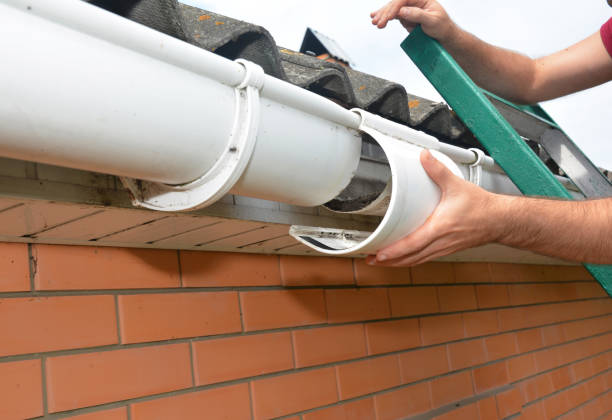
Poor drainage can show up in several ways, and the cause isn’t always obvious from the yard. A gutter may overflow because leaves are blocking the outlet, or water may sit in the trough because the run slopes the wrong way. Both problems can look alike during a storm, yet each calls for a different type of correction.
How a Clogged Gutter Usually Behaves
Leaves, pine needles, roof granules, twigs, and other debris can collect inside the gutter run. Material often gathers near an outlet first because that is where water is trying to leave the trough. Once the opening becomes restricted, water may back up and spill over the front or rear edge.
A clogged downspout can create a similar effect. Water may move normally through most of the gutter and then stop near the outlet because the pipe below cannot drain fast enough. Before assuming the gutter installation is wrong, it makes sense to check the outlet, elbows, and downspout for a blockage.
What Poor Gutter Pitch Looks Like
Gutter pitch refers to the slight slope that directs water toward an outlet. A gutter can appear straight from the yard but still have a low section that holds water. Poor pitch may come from the original rain gutter installation, loose hangers, fascia movement, or a section that has settled over time.
Standing water after the gutter has been cleaned is one clue that pitch could be involved. Water may collect in the middle of a run or remain trapped at the end farthest from the outlet. That does not prove the slope is wrong, but it gives a gutter company something specific to inspect.
Overflow Can Happen With Either Problem
Overflow by itself does not identify the cause. A heavy clog can force water over the gutter edge, but so can a low spot that slows drainage. Concentrated runoff from a roof valley can also overwhelm one section even when the gutter and downspout are otherwise clear.
The location of the overflow can provide some clues. Water spilling near an outlet may point toward a restriction in that area. Overflow from the middle of a gutter run could involve debris, pitch, sagging, or concentrated roof runoff. Gutter companies near me will usually need to look at the whole drainage path rather than judge the issue from one symptom.
Cleaning Helps Separate Debris Problems From Pitch Problems
Cleaning is often the simplest first step when debris is visible. Removing leaves and clearing the outlet lets water move through the system again. If the gutter drains normally afterward, a blockage was likely contributing to the problem.
Persistent standing water after cleaning calls for a closer look. The hangers may be loose, the fascia board could have moved, or the gutter run may have an improper slope. Pouring water into the gutter can sometimes reveal where it slows or pools, but work from ladders or roof edges is better left to someone with the proper equipment and experience.
Hangers and Fascia Can Change the Gutter Slope
Pitch problems do not always begin with a bad installation. Hidden hangers can loosen over time, especially if the gutter has repeatedly carried heavy debris or standing water. A section may drop just enough to create a low point without looking obviously detached from the fascia.
The fascia itself also needs attention. Soft, deteriorated, or damaged fascia may no longer hold fasteners securely. Refastening the gutter without addressing the underlying surface may only provide a short-term fix. A proper inspection should look at both the gutter and what is supporting it.
Downspouts Can Complicate the Diagnosis
A clean gutter with proper pitch can still drain poorly if the downspout is restricted. Debris may become lodged inside an elbow or collect farther down the pipe where it cannot be seen from above. Water then backs up into the outlet and creates symptoms that resemble a clogged gutter.
The discharge point deserves a look as well. A crushed extension, blocked lower elbow, or poorly positioned outlet can slow drainage. Water near the foundation may also involve grading or other site drainage conditions, so the downspout should be considered as one part of the larger runoff system.
Knowing When the System Needs More Than Cleaning
Repeated overflow, standing water after cleaning, visible sagging, or sections pulling away from the fascia may mean the problem goes beyond routine maintenance. A qualified contractor can check gutter pitch, outlets, downspouts, hanger spacing, fascia condition, roof valley runoff, and the final discharge location before deciding what type of repair makes sense.
Water spilling over your roofline usually means you’re dealing with either a nasty clog or a poorly pitched gutter, and Apollo Roofing can help you figure out which one is causing the mess. If your gutters are simply packed with leaves and twigs, their Huntsville team can clear out the buildup safely so everything flows again. But if your gutters look clean and water is still pooling or sagging, the issue is likely a bad pitch, meaning the gutters weren’t angled correctly toward the downspouts during installation. Their crew fixes this by rehanging or adjusting the sections to the exact pitch needed, ensuring heavy rains actually make it to the ground instead of rotting your fascia or flooding your foundation.
