

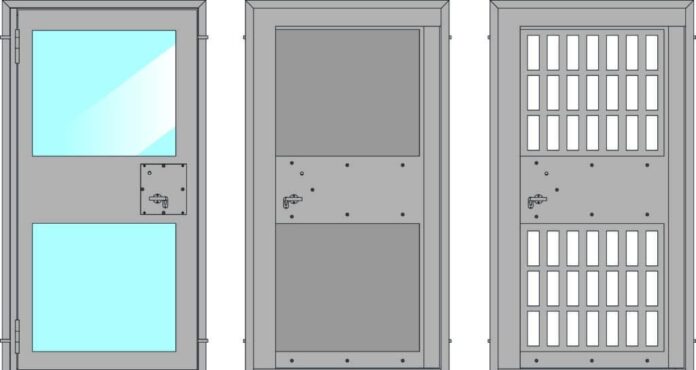
Security inside a correctional facility often depends on the smallest details working exactly as intended. Doors, in particular, serve as the first and last barrier between controlled movement and potential risk. Understanding how modern detention door systems are built and tested reveals why tamper resistance has become a defining feature in today’s facilities.
What Makes Modern Detention Doors Difficult to Compromise
Tampering attempts inside detention environments usually target weak points such as hinges, locks, or frame connections. Modern systems, including Cornerstone detention center doors, are engineered to remove those vulnerabilities through reinforced construction and tight tolerances. Heavy-gauge steel panels limit bending or prying, while concealed hardware reduces access to critical components. Unlike standard commercial doors, detention-grade designs are built with abuse in mind. Installations handled by experienced Cornerstone detention equipment contractors ensure that each component aligns precisely, leaving little room for manipulation or forced entry.
Reinforced Construction That Withstands Daily Stress and Intentional Abuse
Detention doors face constant use, along with intentional attempts to damage or bypass them. Strength begins with material selection, as most systems rely on thick steel cores designed to absorb impact without warping. Internal reinforcements prevent flexing, which often leads to long-term failure in lower-grade doors. Cornerstone prison supply manufacturers produce components tested against repeated force, ensuring durability under both routine and extreme conditions. These doors are not just built to last; they are designed to maintain structural integrity even when subjected to sustained pressure from within the facility.
Precision Locking Systems That Limit Unauthorized Access
Locking mechanisms play a central role in preventing tampering attempts from succeeding. Detention-grade locks used with Cornerstone detention center doors often feature multi-point engagement, making it difficult to force a single entry point. Electronic controls allow staff to monitor and manage access remotely, reducing reliance on manual operation. A Cornerstone security detention equipment contractor typically integrates these systems with broader security infrastructure, ensuring synchronized performance across the facility. Precision engineering ensures that locking components align perfectly, minimizing gaps or weaknesses that could be exploited over time.
How Installation Quality Impacts Long-Term Security Performance
Even the most advanced door system can fail if installed incorrectly. Proper alignment, secure anchoring, and integration with surrounding structures all influence how well a door resists tampering. Skilled Cornerstone detention equipment contractors focus on eliminating installation flaws that could weaken the system. Tight-fitting frames, reinforced wall connections, and accurate calibration of locking hardware ensure consistent operation. Over time, well-installed systems maintain their resistance to manipulation, while poorly installed ones may develop gaps or stress points that compromise safety.
The Role of Innovation in Strengthening Detention Door Systems
Advancements in detention equipment continue to improve how doors perform in high-security environments. Cornerstone prison supply manufacturers have introduced features such as tamper-resistant fasteners, integrated monitoring sensors, and improved weld techniques that enhance overall strength. These innovations allow facilities to detect and respond to potential issues before they escalate. In modular jails, where components are pre-engineered and assembled with precision, these advancements ensure consistent performance across multiple units. As technology evolves, detention doors continue to set higher standards for resisting interference and maintaining secure operations
